
In this comprehensive guide, we outline 10 Planning Hacks for Technical Diving Florida that will elevate your technical diving experience in Florida and help you dive safer, smarter, and more efficiently.
Technical diving requires precision, preparation, and advanced knowledge—especially in a location as dynamic and rewarding as Florida. From deep wreck penetrations off the Atlantic coast to complex cave systems inland, Technical Diving Florida offers world-class opportunities for experienced divers ready to push beyond recreational limits.
However, successful technical dives don’t happen by chance. They require strategic planning, equipment redundancy, environmental awareness, and coordination with reputable dive operators. Whether you are exploring trimix depths offshore or planning decompression dives along the reefs while Diving south Florida, the right preparation can make the difference between a seamless dive and a stressful one.
10 Planning Hacks for Technical Diving Florida

1. Choose the Right Region for Your Technical Dive Goals
Florida offers diverse technical dive environments:
- Deep Atlantic wrecks in South Florida
- Gulf Coast artificial reefs
- Freshwater cave systems in North Florida
- Blue-water drift diving off Palm Beach
If your focus is wreck penetration and deep trimix profiles, South Florida’s coast—particularly areas near Fort Lauderdale and Miami—offers numerous advanced sites. If you prefer overhead cave environments, North Florida’s spring systems are unmatched.
When Diving south Florida, factor in:
- Gulf Stream current strength
- Visibility conditions
- Depth ranges
- Seasonal weather patterns
Matching the site to your certification level and dive objective is foundational.
2. Build Redundancy Into Every Dive Plan
Redundancy is not optional in technical diving—it is mandatory.
Before committing to Technical Diving Florida, ensure you have:
- Dual regulators
- Redundant buoyancy systems (wing + drysuit)
- Backup mask and lights
- Multiple cutting devices
- Independent gas sources
South Florida wreck dives often involve current and decompression obligations. Equipment failure at 150 feet is not manageable without redundancy.
If traveling, verify whether your chosen operator supports technical configurations and whether supplemental cylinders are available.
3. Secure Specialized Scuba Gear Rental Florida in Advance
Not all dive shops support technical configurations. If you are flying into Florida, pre-arrange Scuba gear rental Florida from a dive center that specifically supports tech divers.
Look for availability of:
- Twinsets (doubles)
- Stage and deco cylinders
- Trimix blends
- DPVs (scooters)
- Technical BCDs and wings
- Manifold systems
Confirm oxygen-clean tanks and blending capabilities. South Florida dive charters often require divers to bring their own technical gear unless arrangements are made well in advance.
Never assume gear availability—reserve it.
4. Study Currents Before Diving South Florida
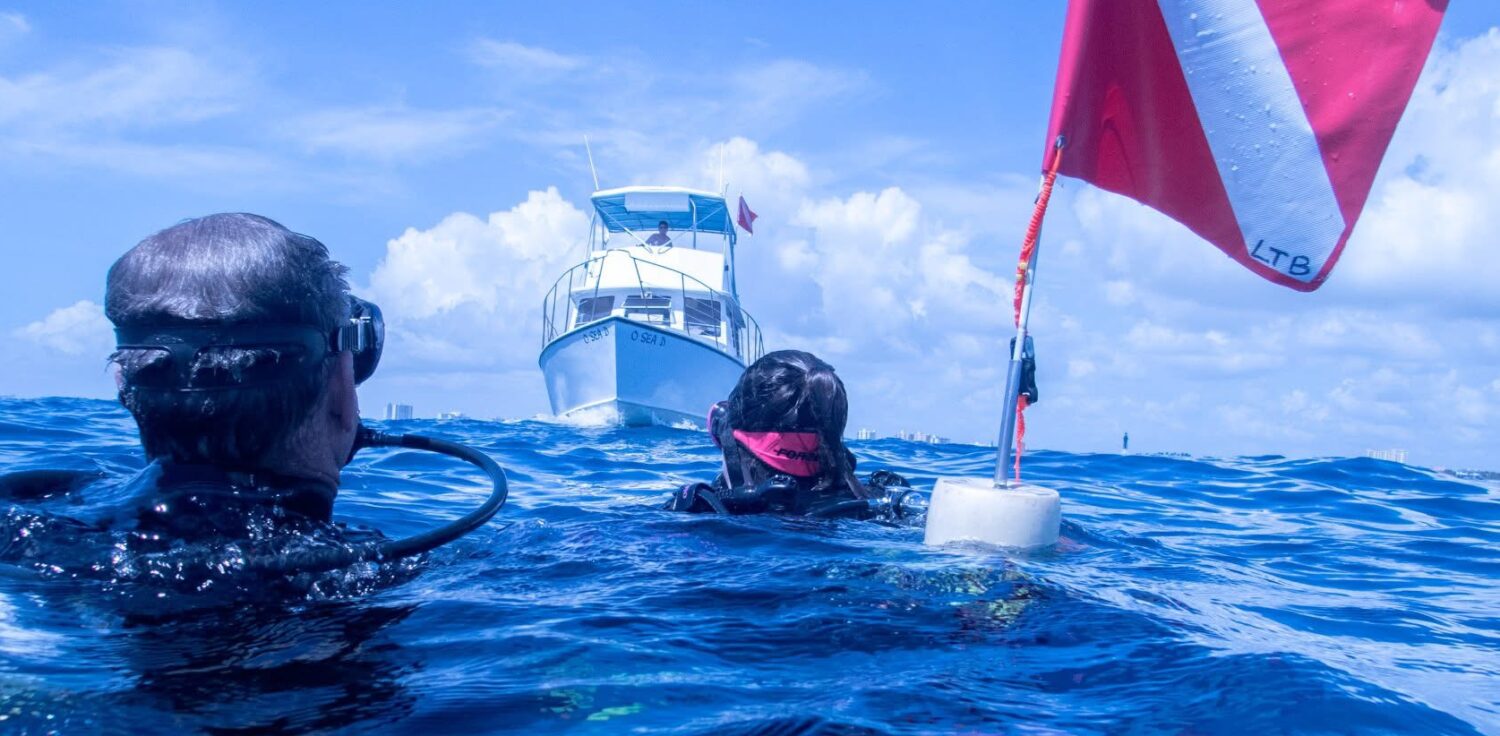
One defining feature of Diving south Florida is the Gulf Stream. This powerful current can enhance drift diving but also complicate deep technical profiles.
Planning considerations:
- Drift entry and pickup logistics
- Shot line versus live drop procedures
- Surface support communication
- SMB deployment timing
- Decompression stop positioning
Technical dives in current require boat captains experienced in tech operations. Always coordinate dive profiles with the captain and crew to ensure pickup timing aligns with decompression schedules.
5. Plan Gas Mixes Strategically
Gas planning is the backbone of Technical Diving Florida.
Determine:
- Bottom gas (air, nitrox, trimix)
- Decompression gases (EAN50, 100% O₂)
- Maximum operating depth (MOD)
- Equivalent narcotic depth (END)
- CNS exposure tracking
Deep wrecks in South Florida often exceed recreational depth limits, making trimix essential for clarity and safety.
Always apply rule-of-thirds or more conservative gas planning when penetrating wrecks or conducting decompression dives offshore.
6. Understand Florida’s Unique Wreck Environment
South Florida is home to numerous deep wrecks that attract advanced divers. These artificial reefs and historical wrecks often sit between 100 and 200+ feet.
Planning considerations include:
- Line placement before penetration
- Silt-out risk in enclosed spaces
- Entanglement hazards
- Sharp metal structures
- Marine life interactions
When conducting Technical Diving Florida on wrecks, penetration training is mandatory. Avoid exceeding your certification level, especially in overhead environments.
Dive planning should always include contingency protocols for lost line, lost buddy, or gas failure.
7. Monitor Weather Windows Carefully
Florida’s conditions can shift rapidly.
Before planning technical dives:
- Monitor wind forecasts
- Assess swell height
- Check small craft advisories
- Evaluate visibility reports
While Diving south Florida can be exceptional year-round, hurricane season (June–November) requires extra vigilance. Technical dives demand calm seas for safe entry, exit, and decompression.
Build flexibility into your travel itinerary in case weather postpones deep offshore dives.
8. Coordinate With a Technical-Capable Charter
Not every dive boat is equipped for technical diving. Choose operators that explicitly support:
- Twinsets and stage cylinders
- Extended bottom times
- Decompression profiles
- Oxygen kits onboard
- Emergency response training
For Technical Diving Florida, charter boats should allow sufficient deck space for gear configuration and analysis. Confirm whether the crew supports multi-level deco stops and delayed surface marker buoy (DSMB) ascents.
Communication is critical. Share your dive plan in advance.
9. Pre-Analyze All Gases and Label Clearly
Never rely on assumptions. Even with reputable Scuba gear rental Florida, always:
- Personally analyze oxygen percentage
- Confirm helium content for trimix
- Label MOD clearly
- Mark cylinders by gas type
- Double-check regulator assignments
Gas mismanagement is one of the most preventable technical diving incidents.
Maintain disciplined labeling and cross-verification protocols with your dive team.
10. Conduct a Detailed Team Briefing Before Every Dive
Technical diving is team diving.
Before entering the water:
- Review dive objectives
- Confirm maximum depth
- Reconfirm turn pressures
- Assign deco gas switch depths
- Establish lost diver protocols
- Review emergency ascent procedures
When Diving south Florida, drift variables make pre-dive coordination even more important. Ensure everyone understands surface signaling procedures and SMB deployment timing.
A 10-minute structured briefing can prevent catastrophic errors.
Additional Planning Considerations for Technical Diving Florida
Certification and Training Requirements
Ensure your certifications align with the dive profile:
- Advanced Nitrox
- Decompression Procedures
- Extended Range
- Trimix
- Cave or Wreck Specialty
Florida operators may request proof of certification before allowing participation in advanced dives.
Physical Conditioning and Hydration
Technical dives demand endurance. Hydration is critical in Florida’s humid climate.
Dehydration increases decompression sickness risk. Drink water consistently before and after dives, and avoid excessive alcohol during multi-day dive trips.
Travel and Logistics Planning
If flying into Florida:
- Confirm airline policies for dive equipment
- Arrange tank fills in advance
- Book tech-friendly accommodations
- Verify rental car space for gear transport
Advanced planning ensures seamless access to Scuba gear rental Florida and minimizes last-minute stress.
Why Florida Is a Global Technical Diving Destination
Florida’s appeal lies in its diversity:
- Deep Atlantic wrecks
- Warm water temperatures
- Year-round diving conditions
- Strong technical diving community
- Access to advanced gas blending facilities
Few regions globally offer such a wide combination of wreck, reef, drift, and cave environments in one state.
For experienced divers, Technical Diving Florida represents both challenge and reward.
Common Mistakes to Avoid
Even seasoned divers can make errors. Avoid:
- Overestimating bottom time
- Underestimating currents
- Skipping gas verification
- Ignoring weather advisories
- Diving unfamiliar wrecks without guides
- Poor hydration
Technical diving requires discipline. Complacency increases risk exponentially.
Final Thoughts
Planning is the foundation of safe and successful Technical Diving Florida. From securing reliable Scuba gear rental Florida to accounting for currents while Diving south Florida, every variable must be analyzed with precision.
By applying these 10 planning hacks—choosing the right region, building redundancy, planning gases strategically, coordinating with tech-capable charters, and conducting disciplined team briefings—you position yourself for safer and more rewarding dives.
Florida remains one of the world’s premier destinations for advanced divers. With meticulous preparation and a conservative mindset, your next technical dive in the Sunshine State can be both exhilarating and professionally executed.