
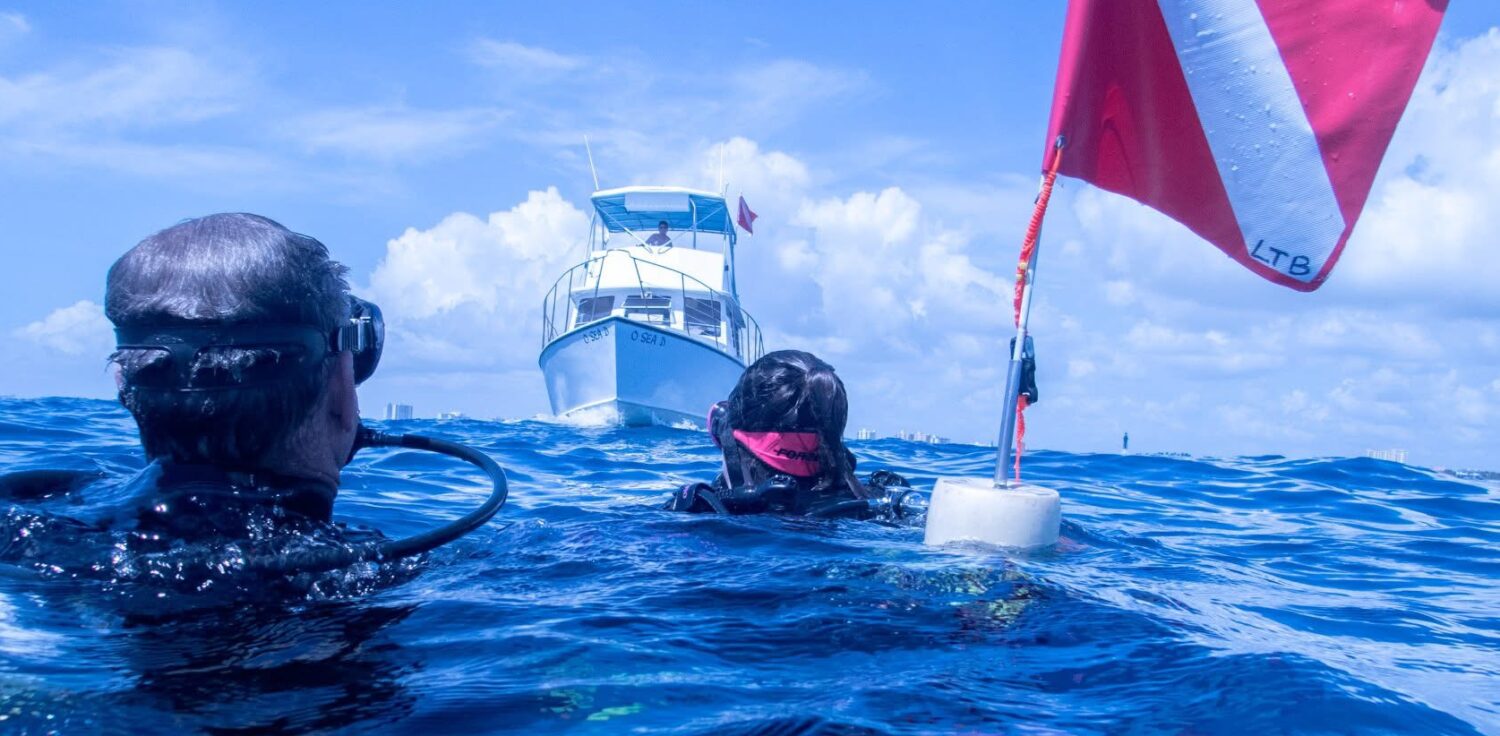
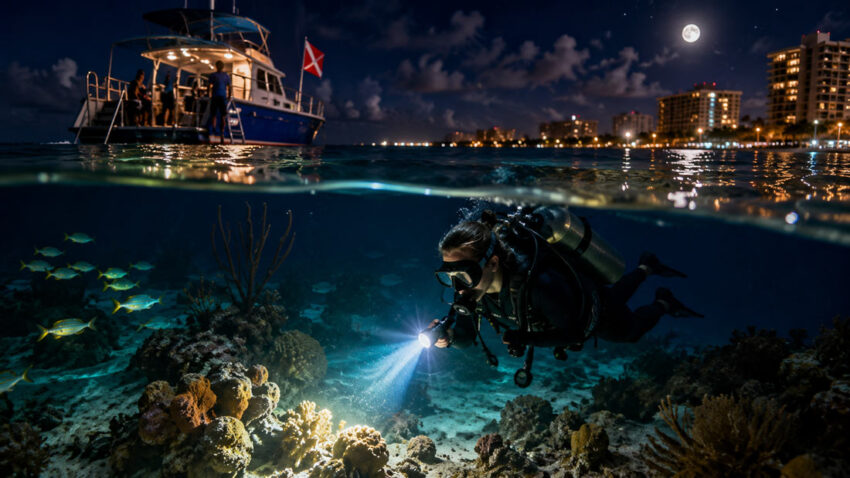
A night dive transforms a familiar underwater landscape into an entirely different world. During the day, coral reefs and wrecks around Pompano Beach are filled with colorful tropical fish and cruising rays. After sunset, nocturnal marine life becomes active, hunting patterns change, and creatures that hide during daylight hours can suddenly appear in your dive light. For certified divers looking for a memorable underwater adventure, booking a Dive Charter Pompano Beach trip can be an excellent way to experience this transformation.
Pompano Beach is particularly attractive for divers because reefs and wrecks are relatively close to shore, reducing boat travel time and giving divers access to a wide variety of underwater environments. Local diving resources describe the area as offering natural reefs, artificial reefs, wrecks and drift dives, while Pompano Beach tourism information highlights the accessibility of its reef system.
However, a night dive requires more preparation than an ordinary daytime excursion. Darkness changes how you navigate, communicate, monitor your surroundings and manage equipment. Choosing the right charter, understanding local conditions and preparing your gear before leaving the dock can make the experience significantly more enjoyable.
If you’re planning Scuba diving trips Florida visitors can enjoy along the Atlantic coast, these eight local tips can help you prepare for a safe and rewarding night dive in Pompano Beach.
Dive Charter Pompano Beach: 8 Local Tips for a Night Dive Trip
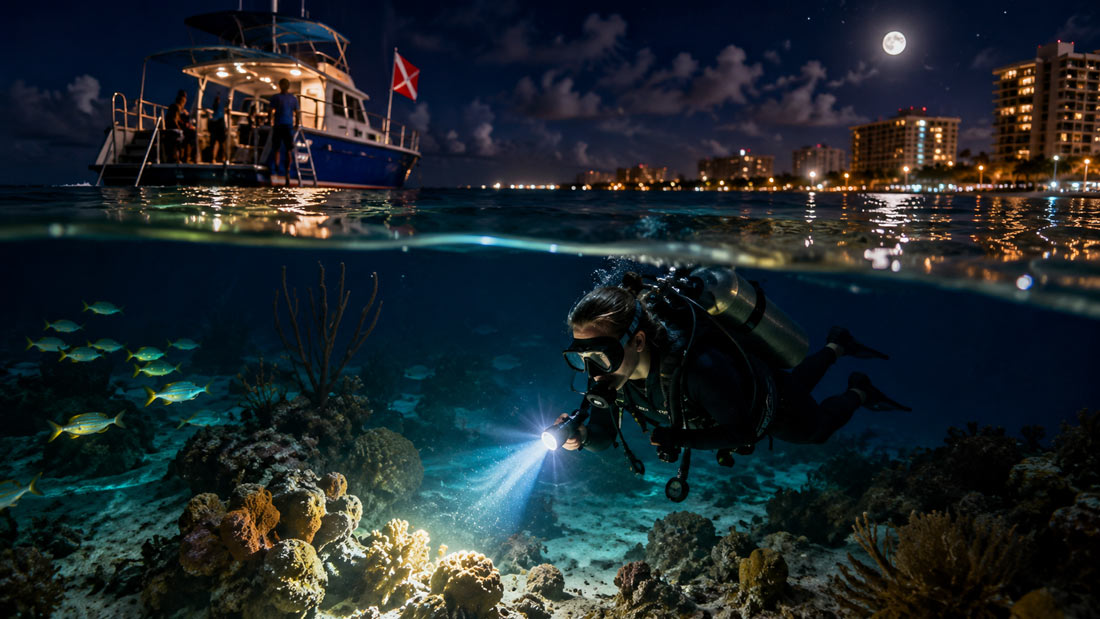
1. Choose a Charter That Regularly Runs Night Dives
The first and most important tip is to select a dive operator that understands night-diving logistics rather than simply asking a daytime charter to accommodate a late departure.
Night diving involves additional considerations, including boat lighting, diver entry and exit procedures, surface visibility, navigation and emergency preparedness. A crew familiar with nighttime operations can make the experience much smoother.
Pompano Beach has several established diving businesses and charter operators. For example, South Florida Diving Headquarters operates dive trips and private charters from Pompano Beach, while AquaLife Divers of South Florida offers private boat charters from its Pompano Beach location. Local operators also advertise reef, wreck and night-diving experiences.
When comparing a Dive Charter Pompano Beach option, ask:
- Does the operator regularly conduct night dives?
- Is the trip specifically designed for night diving?
- What certification level is required?
- Are tanks, weights and rental equipment included?
- What type of dive sites are normally used?
- How many divers will be on the boat?
- What lighting and emergency equipment does the vessel carry?
- What happens if weather or sea conditions deteriorate?
A good charter should clearly explain its policies before you arrive.
Some local operators specifically advertise night diving. Parrot Island Scuba, for example, lists night diving adventures alongside reef and wreck charters.
2. Confirm Your Certification and Experience Requirements
Night diving is not simply daytime diving after dark. The environment is different enough that appropriate training and experience matter.
Many night-diving trips require divers to have an appropriate certification or prior experience. Some wreck and night dives may also involve advanced-level requirements. A local South Florida dive-trip listing, for example, has advertised an Okinawa Wreck Night Dive in Pompano Beach as an advanced dive.
Before booking, provide the operator with accurate information about:
- Your certification level
- Number of logged dives
- Date of your most recent dive
- Night-diving experience
- Wreck-diving experience
- Maximum depth experience
- Any specialty certifications you hold
Don’t exaggerate your experience simply to qualify for a particular site.
If you are certified but have not been underwater for a long time, consider refreshing fundamental skills before attempting a night dive. Practice buoyancy control, regulator recovery, mask clearing, controlled ascents and underwater communication.
For less experienced divers, a guided night dive on a relatively straightforward reef may be more appropriate than a deep wreck.
The goal is not to choose the most technically challenging site. The goal is to enjoy the nighttime environment while staying comfortably within your abilities.
3. Ask About the Exact Dive Site Before Departure
One of the biggest advantages of booking locally is access to people who know the waters.
Pompano Beach has a diverse collection of reef and wreck sites. PADI notes that the area has numerous diveable wrecks and reef environments, with marine life including moray eels, rays, sea turtles and tropical fish.
But the best night-dive location isn’t necessarily the same site you’d choose during daylight.
Ask the charter crew:
“What site are we planning to dive, and why is it suitable for a night dive?”
The answer can help you understand what to expect.
A shallow reef may offer excellent opportunities for observing nocturnal creatures while keeping navigation relatively simple. A wreck can provide an exciting nighttime atmosphere but may involve greater depth, overhead hazards or more demanding navigation.
You should also ask about:
- Expected depth
- Current strength
- Visibility
- Bottom composition
- Wreck penetration restrictions
- Entry and exit procedures
- Typical marine life
- Planned bottom time
- Whether the dive is a drift dive
Local conditions can change, so the final destination may be adjusted based on sea state and safety. AquaLife Divers specifically notes that dive destinations can change according to sea and weather conditions and that safety takes priority.
4. Bring Two Reliable Lights
A dependable dive light is one of the most important pieces of equipment for a night dive.
Your primary light should provide enough illumination to comfortably see the reef, wreck structure, instruments and surroundings. You should also carry a backup light in case the primary light fails.
Don’t wait until you are sitting on the boat to discover that your batteries are weak.
Before leaving for the charter:
- Install fresh or fully charged batteries.
- Test the light.
- Check the O-ring and seals.
- Confirm the switch works properly.
- Secure the light with an appropriate attachment.
- Test your backup light as well.
A backup light doesn’t need to be as powerful as the primary light. Its purpose is reliability.
Your dive computer should also be easily readable at night. If your computer has a back light, confirm that you know how to activate it before entering the water.
A useful local habit is to prepare your lights and personal equipment before reaching the dock. That gives you more time to listen to the captain and dive master rather than dealing with equipment problems immediately before departure.
5. Learn Night-Dive Communication Signals
Communication becomes particularly important when you cannot easily see your buddy’s face or body language.
Your dive team should review hand signals before entering the water. More importantly, divers can use their lights to communicate.
For example, sweeping your light slowly across your buddy can attract attention without shining it directly into their eyes. A small circular movement can be used as an attention signal, depending on the procedures taught by your instructor and agreed upon by the team.
Avoid pointing a powerful dive light directly into another diver’s eyes. It can temporarily impair their vision and make it harder for them to maintain situational awareness.
Before descending, make sure everyone understands:
- The buddy system
- Lost-buddy procedures
- Emergency ascent procedures
- Light-failure procedures
- Surface signaling procedures
- Planned route
- Maximum depth
- Turn-around point
- Exit procedures
Your charter crew should conduct a briefing, but you should actively participate rather than simply listening.
Night diving rewards calm, deliberate behavior.
6. Watch Your Buoyancy and Avoid Touching the Reef
Darkness can make distance and orientation harder to judge.
A coral formation that appears several feet away may actually be much closer than it looks. If you are not maintaining excellent buoyancy control, you may accidentally kick the reef or disturb marine life.
This is especially important because Pompano Beach provides access to coral reef environments that support diverse marine ecosystems.
Good night-diving technique includes:
- Maintaining neutral buoyancy
- Keeping fins away from coral
- Avoiding contact with wreck structures unless permitted
- Using slow, controlled fin movements
- Keeping your equipment streamlined
- Avoiding unnecessary movements
- Maintaining visual contact with your buddy
Don’t use your hands to pull yourself along a reef or wreck.
Night dives are also a great opportunity to observe animals rather than chase them. Your light may reveal moray eels, crabs, lobsters, shrimp and other nocturnal creatures that are less obvious during daylight.
Keep a respectful distance and allow marine life to behave naturally.
7. Plan for the Boat Ride, Not Just the Dive
One mistake new night divers sometimes make is preparing only for the underwater portion of the trip.
Remember that you’ll also be spending time on a boat after sunset.
Even in warm South Florida weather, an evening boat ride can feel surprisingly cool when you are wet. Bring:
- A dry towel
- Dry clothes
- A lightweight jacket or windbreaker
- Water
- A small snack
- Seasickness medication if appropriate for you
- A waterproof bag for electronics
- A certification card if required
- Personal dive accessories
Ask the operator whether tanks, weights, rental equipment, drinks and snacks are included. Packages vary between operators. AquaLife Divers, for example, lists rental equipment separately and says its private charter includes cold drinks and snacks.
Arriving early is also valuable.
Give yourself enough time to park, find the dock, check in, assemble equipment and listen to the briefing without feeling rushed.
For a night trip, arriving at the last minute can be especially stressful because daylight may be fading while you are still organizing your gear.
8. Respect Weather, Current and Visibility Decisions
Perhaps the most important local tip is also the simplest:
Let the crew make safety decisions based on actual conditions.
Pompano Beach is known for accessible reef and wreck diving, but Atlantic Ocean conditions can change. A site that looks perfect in the afternoon may become unsuitable later because of wind, waves, current or reduced visibility.
Responsible operators may change the site, delay the trip or cancel a dive if conditions aren’t appropriate.
That isn’t a disappointment—it is part of responsible diving.
AquaLife Divers states that destinations are subject to change based on sea and weather conditions and emphasizes safety.
As a diver, you should also be willing to call a dive if you don’t feel comfortable.
Don’t allow pressure from other divers to convince you to enter conditions beyond your experience.
A successful night dive isn’t measured by how difficult the site was. It is measured by whether everyone returns to the boat safely and has a positive experience.
What Makes Pompano Beach Night Diving Special?
The appeal of Diving south Florida after sunset comes from the change in behavior beneath the surface.
During the day, divers often focus on reef colors, large fish, rays and the structure of wrecks. At night, the same location can feel completely different.
Your dive light becomes your window into a small section of the underwater world.
You may notice:
- Moray eels becoming more active
- Crabs moving across the reef
- Lobsters emerging from hiding places
- Shrimp appearing in cracks and crevices
- Nocturnal fish becoming more visible
- Coral polyps opening
- Different feeding behavior among reef inhabitants
The experience is also psychological.
A reef that felt familiar during daylight can suddenly feel mysterious when surrounded by darkness. Your attention becomes concentrated on the illuminated area immediately in front of you.
This is one reason night diving can be such a memorable part of Scuba diving trips Florida travelers plan.
Reef Dive vs. Wreck Dive at Night
If you’re choosing between a reef and wreck for your first Pompano Beach night dive, discuss both options with your charter.
Reef Night Dive
A reef can be a good choice for divers who want to concentrate on marine life.
Advantages can include:
- Interesting nocturnal creatures
- Less emphasis on wreck navigation
- Opportunities for close observation
- Potentially simpler orientation
- A strong focus on marine life
However, currents and conditions still need to be considered.
Wreck Night Dive
A wreck creates a dramatic nighttime environment.
The outline of a ship emerging from darkness can be an unforgettable sight. Pompano Beach is known for its wreck-diving opportunities, including artificial reef and shipwreck sites.
But wreck diving can require more experience, particularly at deeper sites or where overhead environments are involved.
Never assume that because you can dive a wreck during the day, you should automatically enter it at night.
Ask the charter whether penetration is permitted and appropriate for your certification and experience.
How to Choose a Dive Charter in Pompano Beach
When comparing a Dive Charter Pompano Beach provider, price should not be your only consideration.
Look at the complete experience.
Consider the Crew
Experienced local crews can make a major difference. They know the area’s reefs, wrecks, currents and typical marine-life encounters.
Check the Boat
Ask about:
- Boat size
- Diver capacity
- Entry and exit systems
- Freshwater facilities
- Restrooms
- Gear storage
- Emergency equipment
- Night lighting
Understand What’s Included
Some operators include tanks and weights, while others charge separately. Rental equipment policies also vary.
Ask About Group Size
Smaller groups can provide a more personalized experience. Private charters can be especially attractive for groups of experienced divers who want more control over timing and site selection.
AquaLife Divers, for example, advertises private charters accommodating groups of up to 18 divers, while other local private charter operations focus on much smaller groups.
Read the Dive Briefing Carefully
A professional operation should explain the site’s characteristics, entry and exit procedures, emergency plans and expected conditions.
What to Expect on Your Night Dive
A typical trip may begin around sunset or shortly afterward, depending on the operator and planned site.
You will generally:
- Arrive at the marina or dock.
- Check in and organize equipment.
- Listen to the captain and dive master.
- Travel to the dive site.
- Complete your buddy checks.
- Enter the water.
- Descend according to the dive plan.
- Explore the reef or wreck.
- Monitor depth, time, air supply and no-decompression limits.
- Ascend according to your planned procedure.
- Complete your safety stop when appropriate.
- Exit the water and return to the boat.
- Debrief and travel back to shore.
The experience can be surprisingly peaceful.
Instead of seeing the entire reef at once, you discover it gradually with your light. A pair of glowing eyes may appear in a crevice. A lobster may emerge from beneath a ledge. A fish may suddenly cross your beam.
That’s the magic of a night dive.
Final Thoughts
A night dive is one of the best ways to experience the underwater world from a completely different perspective. Pompano Beach is especially appealing because of its accessible reefs, wrecks and established local diving community.
The key is preparation.
Choose an experienced operator, confirm certification requirements, understand the dive site, carry reliable primary and backup lights, review communication procedures, maintain excellent buoyancy and listen carefully to local safety advice.
When you’re planning Snorkeling South Florida offers, don’t overlook the nighttime experience. The waters of Diving south Florida can look completely different after sunset, and a properly planned night charter can turn a familiar reef or wreck into an entirely new adventure.
For the best experience, compare local operators, ask detailed questions before booking and choose a trip that matches your certification and comfort level. A quality Dive Charter Pompano Beach experience isn’t just about reaching an exciting dive site—it is about having the right crew, equipment, planning and conditions to explore it safely.