
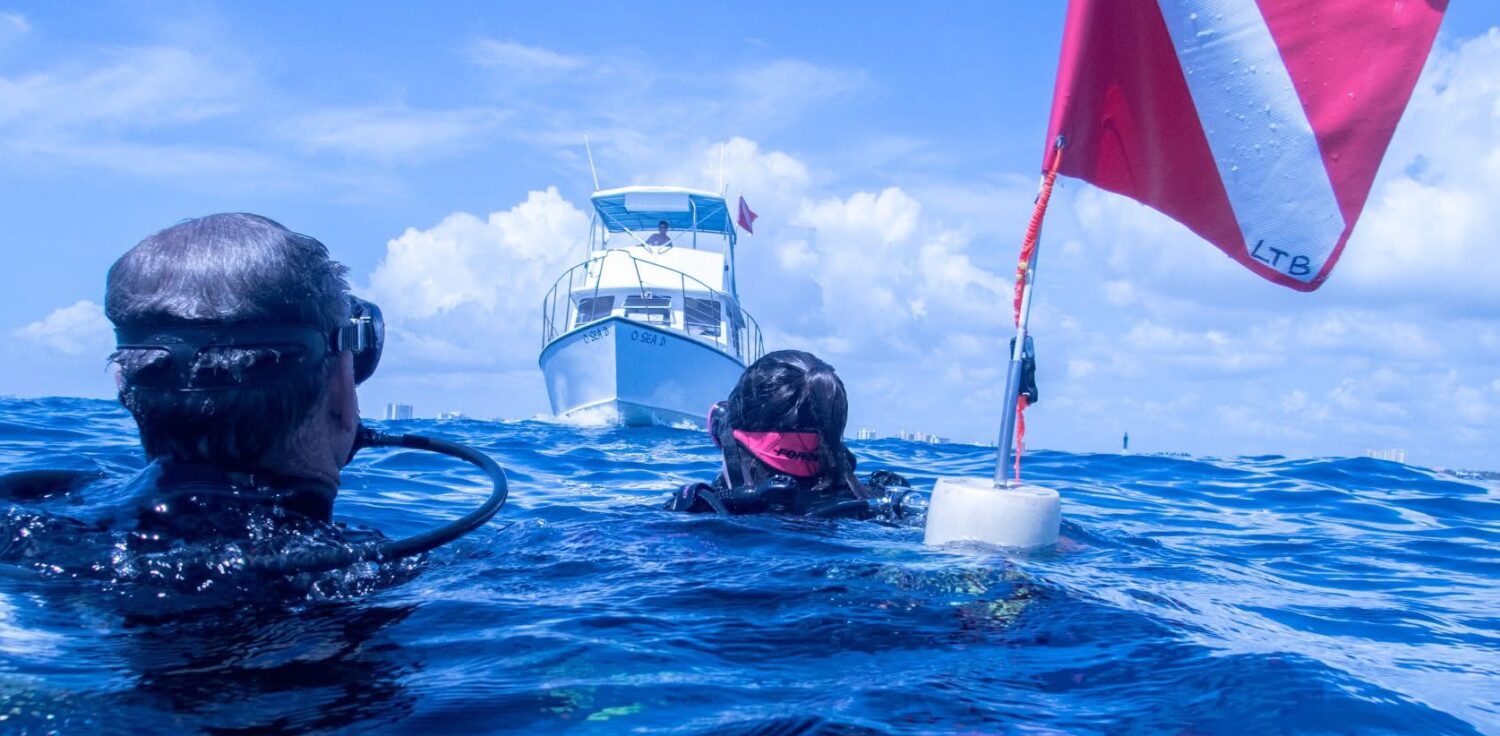
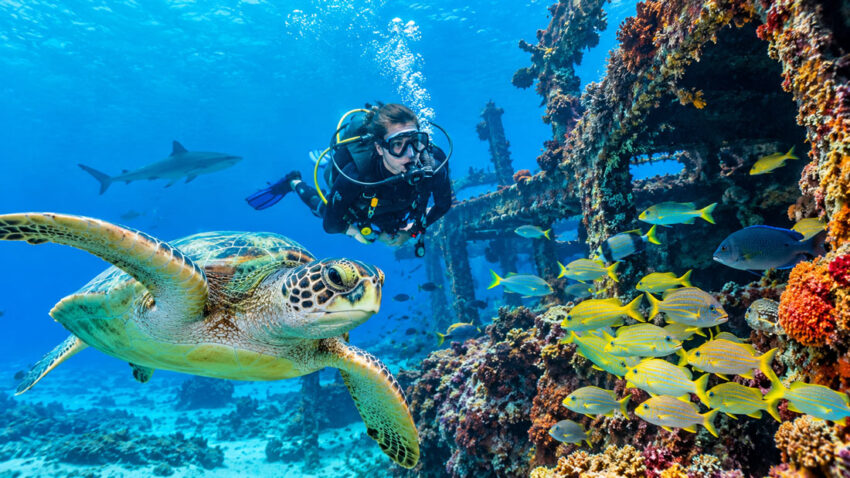
Marine Life Diving Florida is especially appealing to travelers who want more than a typical beach vacation. Beneath the surface, Florida’s Atlantic coastline reveals a vibrant underwater world filled with tropical fish, reef sharks, spotted eagle rays, and other fascinating creatures. South Florida, in particular, attracts scuba enthusiasts because of its accessible reefs, established dive operations, and diverse marine ecosystems.
Florida is one of the most exciting destinations in the United States for underwater exploration. With warm waters, colorful coral reefs, fascinating shipwrecks, and a remarkable variety of marine animals, the Sunshine State offers unforgettable experiences for divers of different skill levels. From watching sea turtles glide over coral formations to observing rays move gracefully across the ocean floor, every dive offers an opportunity to discover something extraordinary.
Whether you are planning your first underwater adventure or returning for another dive trip, exploring the waters of South Florida can create memories that last a lifetime. The key is knowing where to dive, what wildlife you might encounter, and how to enjoy these experiences responsibly.
In this guide, we explore five unforgettable ocean wildlife encounters, explain what makes South Florida special for divers, and share practical tips to help you prepare for your next underwater adventure.
Why Florida Is a Top Destination for Marine Life Diving
Florida’s underwater environment combines tropical and subtropical marine ecosystems, creating habitats for numerous species. The state’s southeastern coastline is particularly popular because the Florida Reef system provides shelter, feeding grounds, and breeding habitats for a wide variety of marine life.
The Florida Keys and the waters near Miami, Fort Lauderdale, Pompano Beach, and Palm Beach offer different underwater experiences. Divers can explore coral reefs, limestone ledges, artificial reefs, and historic shipwrecks, often within a relatively short boat ride from shore.
Several factors make Florida an appealing destination for scuba diving.
Diverse Marine Ecosystems
South Florida’s reefs support colourful parrot fish, angelfish, butterfly fish, moray eels, lobsters, and many other marine animals. Larger species, including sea turtles, rays, and several types of sharks, may also appear during dives.
The variety of habitats means that no two dives are necessarily alike. A reef dive may reveal small creatures hiding among coral formations, while a wreck dive can introduce divers to schools of fish gathering around submerged structures.
Accessible Diving Opportunities
Many South Florida dive sites are accessible through established boat operators. Popular coastal communities offer guided reef trips, wreck dives, beginner-friendly excursions, and advanced diving opportunities.
For travelers staying near the coast, this accessibility makes it easier to include scuba diving in a wider Florida vacation.
Diving Throughout the Year
Florida’s diving season extends across much of the year. Summer often brings warmer water, while winter can offer comfortable diving conditions when weather and visibility cooperate.
However, conditions vary with wind, currents, rainfall, and seasonal weather systems. Marine animal sightings are never guaranteed, and divers should choose locations based on current conditions rather than calendar dates alone.
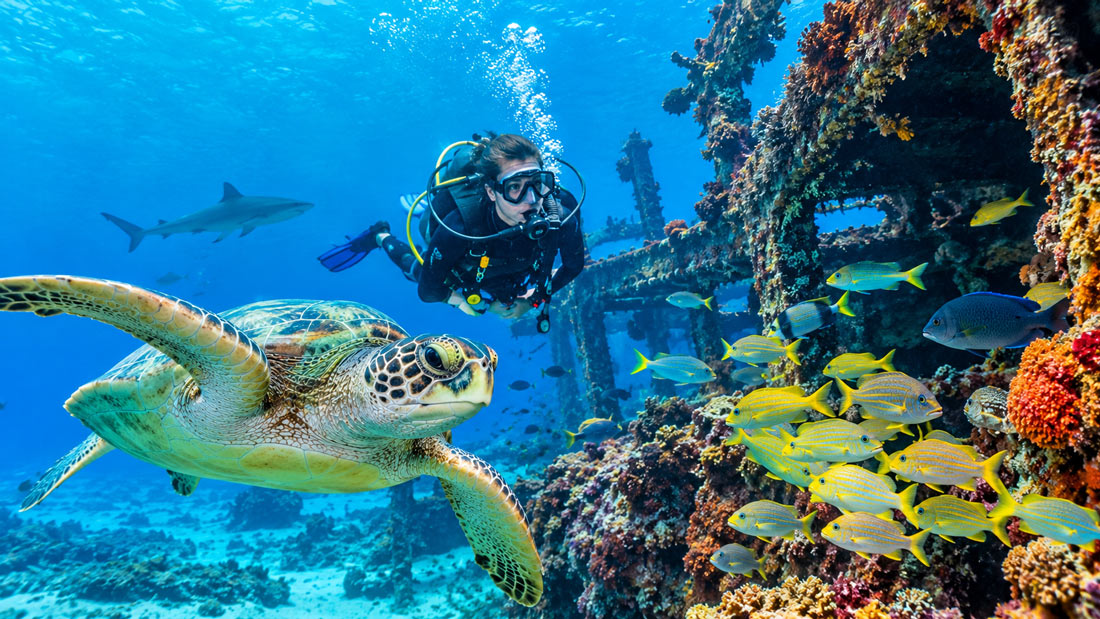
1. Swimming Near Sea Turtles in Their Natural Habitat
Few underwater experiences are as memorable as seeing a sea turtle moving effortlessly through the ocean. These ancient marine reptiles are among the most recognizable animals in Florida’s coastal waters, and encountering one while scuba diving can be a highlight of an entire trip.
Where You Might See Sea Turtles
Sea turtles are found in different parts of South Florida, including the Florida Keys and reef systems along the Atlantic coast. Green turtles, loggerhead turtles, and hawks bill turtles may be encountered in suitable habitats, although their distribution and likelihood of sightings vary by location and season.
Reef environments provide feeding opportunities and resting places for some turtles. During a dive, you might spot one swimming above a coral formation, resting near a ledge, or moving between patches of reef.
Florida is also important for sea turtle nesting, particularly during the warmer months. However, nesting activity occurs on beaches and should not be confused with the likelihood of encountering turtles underwater.
What Makes This Encounter Special?
Sea turtles move with a calm, deliberate rhythm that makes them fascinating to observe. Their streamlined bodies and powerful flippers allow them to glide through the water with minimal effort.
Watching a turtle navigate its environment also provides a reminder of how marine animals depend on healthy coral reefs and sea grass habitats.
For underwater photographers, a sea turtle can make a beautiful subject. The best photographs often come from allowing the animal to move naturally through the scene rather than trying to get close.
How to Observe Sea Turtles Responsibly
Keep a respectful distance, avoid blocking the turtle’s path, and never chase or touch it. Do not surround a turtle or interfere with its ability to reach the surface to breathe.
A responsible diver observes wildlife without changing its behavior. This approach protects the animal and often produces a more rewarding encounter.
Best experience: Choose a guided reef dive with a reputable local operator who understands turtle habitats and responsible wildlife observation.
2. Discovering Reef Sharks in the Open Water
Sharks are among the ocean’s most misunderstood animals, yet observing them underwater can be an extraordinary experience. In South Florida, divers may encounter reef-associated shark species, including nurse sharks and, depending on the location and conditions, other coastal sharks.
Seeing a shark move through its natural habitat offers a different perspective from the dramatic images often shown in movies and television.
Where Reef Shark Encounters Happen
Sharks inhabit a range of South Florida environments, including coral reefs, rocky ledges, sandy areas, and deeper offshore waters. Certain sites in the Florida Keys and along the southeastern coast are known for occasional shark sightings.
Nurse sharks are often seen resting on sandy bottoms or beneath ledges. Other shark species may appear while cruising along reef edges or passing through open water.
The probability of an encounter depends on the specific dive site, season, water conditions, and animal behavior. No responsible dive operator can guarantee a wild shark sighting.
What You Can Expect Underwater
A shark encounter can feel surprisingly peaceful. Rather than approaching divers, many sharks continue moving through the water or keep their distance.
Divers may observe the animal’s streamlined shape, controlled movements, and ability to maneuver through its environment. Nurse sharks, in particular, are sometimes seen resting on the bottom during daylight hours.
The experience is most rewarding when divers remain calm and allow the shark to behave naturally.
Shark Diving Safety Tips
Always follow your dive master’s instructions and stay with your group. Avoid chasing sharks, attempting to touch them, or making sudden movements to attract their attention.
Never feed, harass, or corner marine wildlife. If a shark approaches, maintain awareness of your surroundings and follow your guide’s advice.
It is also important to remember that sharks are wild animals. A safe encounter depends on appropriate site selection, sound diving practices, and respect for wildlife.
Best experience: Ask a professional dive operator about established reef sites with a history of natural shark sightings, and choose an excursion appropriate for your certification and experience.
3. Watching Spotted Eagle Rays Glide Over the Reef
Spotted eagle rays are among the most graceful animals a diver can encounter in South Florida. Their broad, winglike pectoral fins create a flying motion underwater, allowing them to glide effortlessly over sandy areas and coral reefs.
Their dark upper surfaces, pale spots, and long tails make them especially distinctive.
Where to Look for Spotted Eagle Rays
Spotted eagle rays inhabit warm coastal and offshore waters, including parts of South Florida and the Florida Keys. They may be seen swimming over sandy seabeds, crossing reef systems, or moving through open water.
Unlike small reef fish that remain close to shelter, eagle rays often travel through larger areas. This means sightings can be brief, sometimes lasting only a few moments before the animal disappears into the blue.
Divers who maintain good buoyancy and scan the surrounding water may be better positioned to notice a ray approaching from a distance.
Why This Encounter Is Unforgettable
The sight of a spotted eagle ray passing overhead can make the ocean feel almost weightless. Its broad fins rise and fall in a smooth rhythm, while its spotted body stands out against the blue water.
These encounters are also a reminder that the reef is connected to a much larger ecosystem. Marine animals do not remain in one place simply because divers are visiting a particular site.
For photographers, rays can create dramatic silhouettes when the light is favorable. A wide-angle lens is often more useful than trying to photograph the animal at close range.
Tips for a Better Ray Encounter
- Maintain neutral buoyancy to avoid disturbing the seabed.
- Look beyond the reef itself, especially toward open water.
- Keep a respectful distance and allow the ray to continue its natural route.
- Avoid sudden swimming movements that could disturb nearby marine life.
- Listen to your dive master, who may recognize common wildlife movement patterns at the site.
Best experience: Consider a reef dive in the Florida Keys or along the southeastern Florida coast, where suitable habitats may offer opportunities to encounter rays.
4. Exploring Colorful Coral Reefs Filled With Tropical Fish
For many divers, coral reefs provide the most consistently rewarding wildlife encounters in Florida. While larger animals attract attention, the small details of a reef can be equally fascinating.
A single coral formation may support numerous fish species, crustaceans, mollusks, and other organisms. The longer you spend observing the reef without disturbing it, the more activity you may notice.
The Underwater Life of South Florida’s Reefs
South Florida’s reef environments support tropical fish such as parrotfish, angelfish, butterfly fish, dam selfish, grunts, and wrasses. Depending on the location, divers may also spot moray eels, spiny lobsters, crabs, and other creatures hiding among ledges and crevices.
Parrotfish are particularly interesting because they use specialized teeth to graze on algae growing on reef surfaces. Angelfish and butterfly fish add flashes of color as they move between coral formations.
Moray eels may remain partly concealed in rocky openings, while lobsters often shelter beneath ledges during daylight hours.
Every dive offers different opportunities to notice feeding behavior, territorial displays, cleaning interactions, and the relationships between animals and their habitats.
Why Reef Diving Appeals to Beginners and Experts
Coral reef diving can be rewarding even when visibility is limited or larger animals are absent. There is usually plenty to observe at a manageable pace, provided conditions are appropriate for the diver’s experience.
Beginners can learn to identify common fish and practice buoyancy control in suitable conditions with a qualified instructor or guide. Experienced divers may focus on macro photography, unusual species, or more complex reef structures.
The most important skill is moving slowly enough to observe what is happening around you.
Protecting Florida’s Coral Reefs
Coral reefs are living ecosystems that can be damaged by careless contact. Even a brief touch from a fin, hand, or piece of equipment can break fragile coral or disturb the animals living there.
Good reef-diving practices include:
- Maintaining neutral buoyancy and keeping fins away from the bottom.
- Never standing, kneeling, or resting equipment on coral.
- Avoiding contact with marine animals.
- Using reef-conscious sun protection when appropriate and following local guidance.
- Securing hoses, gauges, and other loose equipment.
- Following marine park rules and the instructions of local dive professionals.
Florida’s reefs face pressures from warming ocean temperatures, coral disease, pollution, and other environmental changes. Responsible diving helps reduce avoidable damage, although broader conservation efforts are also essential.
Best experience: Book a guided reef dive in the Florida Keys, Pompano Beach, Fort Lauderdale, or another established South Florida diving area suited to your experience level.
5. Encountering Dolphins and Other Marine Life in Open Water
Dolphins are among the most exciting animals to see in the ocean. Their intelligence, agility, and social behavior make them fascinating to observe, whether they are spotted from a boat or encountered incidentally during a dive.
South Florida’s coastal waters support several marine mammal species, including bottle nose dolphins. However, dolphins are mobile animals, and a sighting during scuba diving is never guaranteed.
Where Dolphin Sightings May Occur
Dolphins can be found in coastal waters, bays, inlets, and offshore environments throughout South Florida. Boat trips departing from coastal communities may occasionally encounter them while traveling to or from dive sites.
During a scuba excursion, divers might see dolphins in the distance or hear their sounds underwater. A close underwater encounter is much less predictable than a general sighting from a boat.
Some operators offer wildlife-focused boat trips, but travelers should distinguish between a general marine wildlife excursion and a scuba dive specifically designed for underwater wildlife observation.
What Makes Dolphins So Fascinating?
Dolphins are highly social marine mammals that communicate through sounds and body movements. They use echolocation to navigate and locate prey, and they often travel in groups.
Watching dolphins move through open water provides a glimpse of behavior that is difficult to appreciate from photographs alone.
Other animals may also appear during offshore dives, including large schools of fish, barracuda, rays, and sea turtles. Depending on the site, divers may see pelagic species passing through rather than remaining around the reef.
Respecting Dolphins in the Wild
Never chase dolphins, attempt to touch them, or try to force an underwater encounter. Avoid feeding them or encouraging them to approach boats or divers.
Choose operators that follow applicable wildlife-protection rules and do not promise guaranteed close contact with wild dolphins.
Best experience: Combine a professionally guided scuba trip with a responsible wildlife-watching excursion if seeing dolphins is a major priority.
Planning Your Marine Life Diving Florida Adventure
The quality of your underwater experience depends on more than the animals you hope to see. Choosing the right dive location, checking conditions, and working with a reputable operator can make your trip safer and more enjoyable.
Choose the Right South Florida Dive Destination
Different coastal communities offer different underwater environments.
Pompano Beach: Known for access to reef systems and shipwrecks, Pompano Beach is a popular choice for divers interested in a combination of marine life and underwater structures.
Fort Lauderdale: Divers can explore a variety of reef and wreck sites, with trips available for different certification levels depending on the operator and conditions.
Miami: Miami offers access to coastal and offshore dive environments, although the suitability of each site depends on weather, currents, and experience.
Florida Keys: The Keys are famous for their extensive reef habitats and marine biodiversity. They are an excellent option for travelers who want to make underwater exploration a central part of their vacation.
Before booking, ask about boat departure times, dive duration, equipment rental, maximum depth, current conditions, and the experience required for the planned site.
When Is the Best Time to Go Diving?
Scuba diving is possible throughout much of the year in South Florida, but no season guarantees perfect conditions.
Spring and summer often offer warmer water, while fall and winter may bring cooler conditions and periods of good visibility. Wind direction, storms, rainfall, currents, and local ocean conditions can change the experience from one day to another.
Hurricane season also deserves attention when planning a trip, particularly for travelers with fixed schedules. Monitor official weather forecasts and follow the dive operator’s advice about cancellations or site changes.
If your primary goal is to see a particular animal, ask local professionals about recent sightings and seasonal patterns. Their observations can help you choose a promising area, but wildlife remains unpredictable.
What Should You Bring?
Preparing the right equipment makes a difference, whether you are joining a guided boat trip or planning several days of diving.
Consider packing:
- A well-fitting swimsuit and a towel.
- Reef-appropriate sun protection for time spent above water.
- A reusable water bottle.
- A logbook and certification details, where applicable.
- A dive computer if you own and normally use one.
- A mask, fins, and snorkel if you prefer using your own equipment.
- A rash guard or exposure protection appropriate to water temperature.
- An underwater camera, if you are comfortable using one without compromising buoyancy.
Many operators provide rental equipment, but it is worth confirming what is included before departure.
Safety Tips for Scuba Diving South Florida
Safety should always come before wildlife sightings or underwater photography.
First, dive within your certification and current ability. Beginners should select suitable introductory dives or complete training with a qualified instructor. More demanding wrecks, deeper sites, and stronger currents may require additional experience.
Second, check your equipment before entering the water and complete the required pre-dive safety checks with your buddy. Follow your guide’s briefing and understand the entry, exit, depth, and communication procedures.
Third, maintain appropriate buoyancy and monitor your air supply, depth, and dive time. Follow established ascent procedures, including safety stops when appropriate, and never exceed your training limits.
Fourth, pay attention to currents and changing sea conditions. If conditions are unsuitable, accept a site change or cancellation rather than taking unnecessary risks.
Finally, avoid flying too soon after scuba diving. Follow recognized diving guidance for surface intervals before air travel, and seek advice from a qualified dive professional if your itinerary includes multiple dives or repetitive diving.
How to Choose a Reliable South Florida Dive Operator
A professional dive operator contributes significantly to a successful trip. Before making a reservation, look beyond the promise of exciting wildlife encounters and assess the company’s safety practices.
Ask whether the operator verifies certification and experience, provides a thorough briefing, maintains rental equipment, and limits group sizes appropriately. Find out whether the planned dive site matches your experience level and whether a dive master or instructor will accompany the group.
It is also helpful to ask how the company approaches wildlife encounters. Responsible operators emphasize observation rather than touching, feeding, chasing, or handling animals.
Read recent customer reviews, check cancellation policies, and confirm what happens if weather conditions prevent the trip from operating.
Most importantly, be cautious of any company that guarantees sightings of wild animals. Experienced guides can select suitable habitats and explain where animals are commonly observed, but nature cannot be scheduled.
Responsible Diving: Protecting the Ocean for Future Generations
Every diver has a role in protecting the environments they visit. Coral reefs, sea grass beds, and other coastal habitats support marine biodiversity while contributing to the ecological health of South Florida.
Small actions can make a meaningful difference during a dive trip. Avoid touching coral, never remove marine life or souvenirs from the ocean, and secure equipment that could drag across the seabed.
Choose reusable items where practical, dispose of waste properly, and follow local marine park regulations. If you photograph wildlife, prioritize the animal’s welfare over getting a close-up image.
Divers can also support conservation by learning about reef restoration, coral monitoring, and local marine protection initiatives. When appropriate programs are available, ask reputable organizations how visitors can contribute without disturbing sensitive habitats.
Responsible diving is not only about avoiding harm. It is also about developing a deeper appreciation for the connections between marine animals, their habitats, and the communities that depend on healthy coastal ecosystems.
Frequently Asked Questions
1. What marine animals can I see while diving in South Florida?
Depending on the location and conditions, divers may encounter sea turtles, nurse sharks, spotted eagle rays, tropical reef fish, moray eels, lobsters, and other marine animals. Dolphins may also be spotted from dive boats or, less predictably, underwater.
2. Is South Florida suitable for beginner scuba divers?
Yes. South Florida has operators offering introductory experiences, training dives, and guided trips at suitable locations. Beginners should choose a program appropriate to their training and avoid advanced wrecks, strong currents, or deeper sites until properly qualified.
3. When is the best time for scuba diving in South Florida?
Diving is possible year-round, but visibility, water temperature, currents, and weather vary. Check current local conditions and ask your operator which sites are most suitable during your travel dates.
4. Can I swim with sea turtles while scuba diving?
You may encounter sea turtles during a dive, but sightings are not guaranteed. Observe them from a respectful distance and never touch, chase, surround, or obstruct their movement.
5. Are shark encounters safe for divers?
Sharks are wild animals, so no encounter can be guaranteed safe. Many divers observe sharks without incident when following professional guidance, maintaining appropriate distance, and avoiding feeding or harassing wildlife. Choose a reputable operator and dive within your experience level.
6. Is Pompano Beach a good place for marine life diving?
Pompano Beach is a well-known South Florida diving destination with access to reef and wreck environments. The best site depends on your certification, sea conditions, and the kind of marine life you hope to observe.
7. Do I need my own scuba equipment?
Not necessarily. Many dive operators offer rental equipment. Confirm availability, sizing, costs, and what is included when you book. If you own personal equipment, bring items that fit comfortably and that you are familiar with using.
Final Thoughts: Discover the Magic of Diving South Florida
From graceful sea turtles and fascinating reef sharks to spotted eagle rays and colorful coral communities, Marine Life Diving Florida offers a remarkable way to experience the ocean beyond the shoreline. Each encounter provides a closer look at the diversity of life that makes South Florida’s underwater environments so special.
The region offers something for many types of divers, whether you prefer exploring coral reefs, discovering shipwrecks, photographing small marine creatures, or simply enjoying the movement of fish through clear blue water. Pompano Beach, Fort Lauderdale, Miami, and the Florida Keys each provide opportunities to explore different underwater habitats.
The best diving experiences combine thoughtful planning, appropriate training, and respect for marine life. Choose a reputable local operator, check conditions before your trip, and keep your expectations flexible. You may not see every animal on your wish list, but a single unexpected encounter can become the highlight of your vacation.
If you are planning a coastal getaway, consider making Diving south Florida and Scuba diving south Florida part of your itinerary. With responsible practices and a spirit of discovery, your next underwater adventure can be both unforgettable and environmentally conscious.