
Scuba Gear Rental Florida: Why a Gear Inspection Matters
There is something special about preparing for a dive in Florida. The warm water, colorful reefs, wrecks, clear visibility, and abundant marine life can make every underwater trip memorable. Whether you are planning a first recreational dive or returning to familiar sites, having dependable equipment is an important part of enjoying the experience.
For divers who do not own a complete setup, Scuba Gear Rental Florida services provide a convenient way to get the equipment needed for a dive without transporting tanks, regulators, buoyancy equipment, and other bulky items. Rental equipment is commonly used by vacationers, traveling divers, occasional divers, and even experienced divers who prefer not to bring their entire setup.
However, convenience should never replace inspection.
Before entering the water, take a few minutes to look over your rental equipment and make sure you understand how everything works. A professional dive operator should maintain and inspect its equipment, but divers should also become comfortable performing a basic pre-dive check.
This is especially valuable when Scuba diving Florida, where conditions can change from calm and clear to current, surge, or reduced visibility depending on the location and weather.
Scuba Gear Rental Florida: 6 Essential Gear Items to Inspect Before Diving
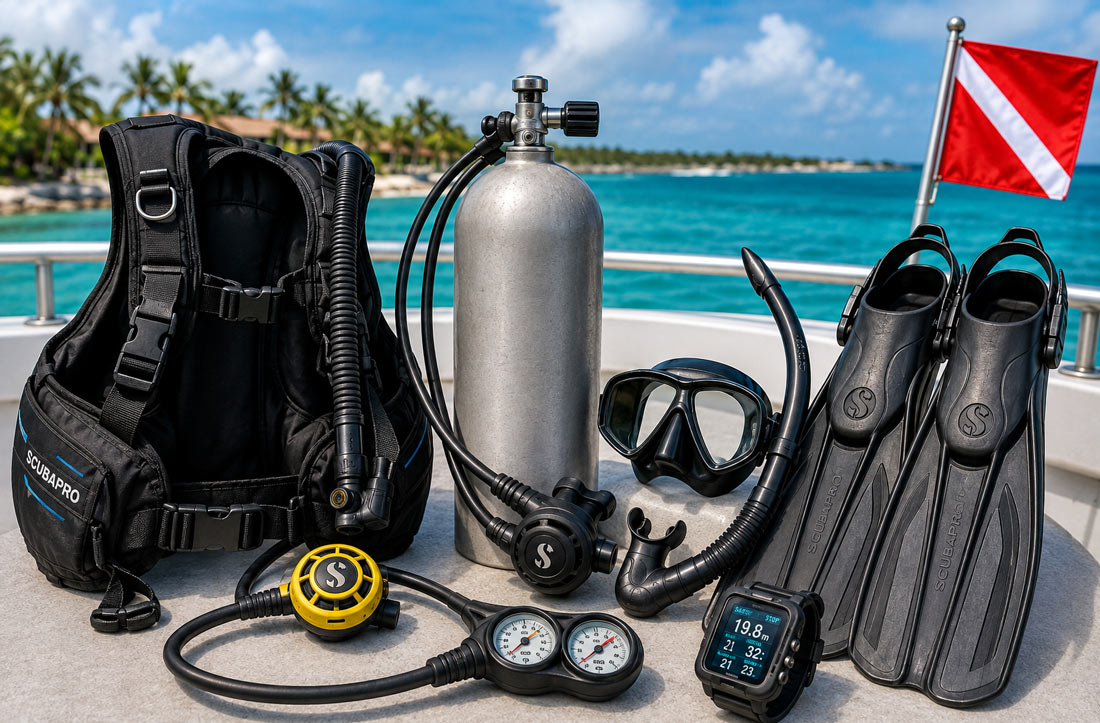
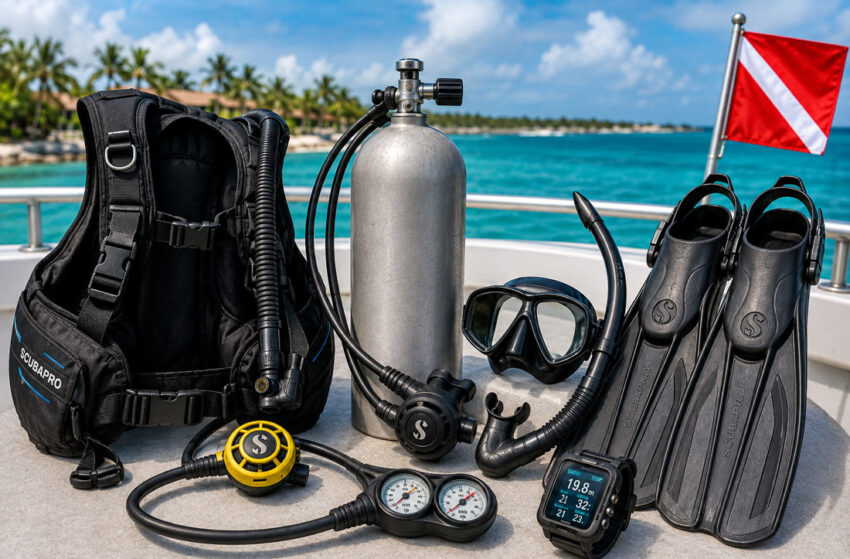
Here are six essential pieces of rental gear worth inspecting before every dive.
1. Inspect the Regulator System
The regulator is one of the most important pieces of scuba equipment because it delivers breathing gas from the tank at a pressure you can comfortably breathe.
When receiving rental equipment, inspect the entire regulator system rather than looking only at the mouthpiece.
Check the first stage and hoses
Look for obvious signs of damage, cracking, severe wear, or loose connections around the first stage and regulator hoses. Hoses should not show serious cuts, bulges, or deterioration.
Pay particular attention to where hoses connect to the first stage. Connections should appear secure, and nothing should look unusually loose or damaged.
Test the primary second stage
Before the dive, breathe from the primary regulator while the system is pressurized. It should deliver air smoothly without unusual resistance, excessive free-flowing, or strange noises.
The mouthpiece should also be in good condition. A damaged or excessively worn mouthpiece can be uncomfortable and may make it harder to maintain a comfortable grip.
Check the alternate air source
Do not forget the octopus or other alternate air source. It should be accessible and properly secured.
If you are diving with a buddy, both divers should know where each person’s alternate air source is located.
Why this matters
Underwater, your regulator is not something you want to troubleshoot for the first time. A quick surface inspection gives you an opportunity to identify obvious problems before they become distractions during the dive.
If something does not feel right during the equipment check, tell the dive professional before entering the water.
2. Examine the Buoyancy Compensator Device
The buoyancy compensator device, commonly called a BCD, helps divers control buoyancy and maintain a comfortable position in the water.
A rental BCD should receive a careful inspection because it combines an inflatable bladder, valves, straps, buckles, an inflator mechanism, and connection points.
Inflate and deflate the BCD
Connect the low-pressure inflator and test the power inflator. The BCD should inflate appropriately when you press the inflation button.
Then test the deflation mechanisms. Air should release when the appropriate buttons or dump valves are operated.
If the BCD inflates but does not deflate properly, or if you notice unusual leakage, stop and have the equipment checked.
Inspect straps and buckles
Look at the shoulder straps, waist strap, tank band, and buckles.
A buckle that does not close securely can become a serious inconvenience underwater. Straps should not be excessively frayed or damaged.
The tank should also sit securely in the BCD. Before entering the water, make sure the tank band is correctly positioned and tightened according to the operator’s procedure.
Look for leaks
Inflate the BCD and listen and feel for obvious leaks. You do not need to perform complicated technical testing. The goal is to identify visible or noticeable problems before diving.
During Diving south Florida, proper buoyancy control can also make a major difference in comfort and air consumption, particularly when diving reefs or wrecks where maintaining position helps protect both the diver and the underwater environment.
3. Check the Scuba Tank and Valve
The tank contains your breathing gas, so it deserves more than a quick glance.
When you receive a rental tank, look over the exterior for obvious signs of damage, deep corrosion, severe dents, or other conditions that concern you.
Verify the tank pressure
Check the pressure gauge after the regulator is connected and pressurized.
The exact pressure you should expect depends on the tank and the operator’s procedures. Rather than assuming every tank will show the same reading, ask the dive professional if you have questions about the expected pressure.
Inspect the valve connection
The valve should connect properly to the regulator first stage. Once the system is pressurized, listen for unusual leaks around the connection.
A persistent hiss or visible problem should be addressed before entering the water.
Check identification and markings
Professional dive operators maintain tanks according to applicable inspection and service requirements. Divers should still become accustomed to looking at the tank and confirming that they have been given the appropriate equipment.
If anything appears unusual or you are uncertain about the tank, ask the crew.
A good dive operation will generally prefer that you raise a concern at the dock rather than discover it after leaving the boat.
4. Inspect the Mask and Snorkel
A leaking mask can turn an otherwise enjoyable dive into an uncomfortable experience.
The good news is that checking a rental mask is simple.
Examine the silicone skirt
Look around the entire mask skirt for obvious tears, cuts, deformation, or excessive deterioration.
The skirt should sit comfortably against your face and create a reasonable seal.
A mask that does not fit properly can leak even when the equipment itself is in good condition. Take your time selecting the right size.
Test the seal
Place the mask gently against your face without using the strap and inhale slightly through your nose. The mask should remain comfortably sealed against your face.
This is only a basic fit check, not a guarantee that the mask will never leak underwater, but it can help you identify a poor fit before the dive.
Check the lenses and strap
Look for cracks or significant damage to the lenses. Check the strap and buckles to ensure they adjust normally.
If you are renting a snorkel as well, inspect the mouthpiece and tube for obvious damage.
For people new to Scuba diving Florida, a properly fitting mask can make the experience considerably more comfortable. Clear vision and easy breathing through the regulator allow you to focus more on the underwater environment instead of constantly adjusting equipment.
5. Examine Your Fins, Boots, and Exposure Protection
Fins may seem simple compared with a regulator or BCD, but they still deserve attention.
Your fins should be comfortable and appropriately sized. Check the foot pocket and blade for obvious cracks, tears, or severe damage.
Check the fin straps
If you are using open-heel fins, inspect the straps and buckles. They should adjust properly and remain secure.
A loose fin can be frustrating during a dive, while an uncomfortable fin can contribute to foot or leg fatigue.
Inspect dive boots
If the rental setup includes boots, make sure they fit comfortably. Look for major damage around the sole, heel, and seams.
The right combination of boots and fins can improve comfort considerably, particularly during boat entries and exits.
Consider exposure protection
Depending on the season, location, depth, and individual comfort, you may use a wet suit or other exposure protection.
Inspect the suit for significant tears, damaged zippers, or other problems. A suit does not have to look brand-new to function properly, but major damage should be reported.
Florida’s water temperatures vary throughout the year, and individual tolerance for cooler water is different. If you are unsure about the appropriate exposure protection for your dive, ask the local dive crew.
6. Check the Dive Computer and Other Safety Equipment
Modern recreational diving often involves a dive computer, and rental computers can be particularly useful for traveling divers who do not want to carry their own.
Before the dive, make sure you understand the basic operation of the computer you are using.
Confirm that the computer is functioning
The screen should be readable, buttons should respond appropriately, and the battery should have sufficient power according to the operator’s guidance.
Make sure you know how the computer displays depth, dive time, no-decompression information, ascent information, and other relevant data.
If you are unfamiliar with the model, ask the dive professional for a quick explanation.
Do not ignore basic safety equipment
Depending on the type of dive, boat, and operator, you may also encounter equipment such as surface signaling devices, whistles, lights, or other safety equipment.
Ask what safety equipment is provided and where it is located.
For boat diving, it is also useful to listen carefully to the crew’s briefing. The briefing may cover entry and exit procedures, current, maximum depth, bottom time, navigation, emergency procedures, and what to do if you become separated from your buddy or group.
Equipment is only one part of dive safety. Knowing how to use it and understanding the dive plan are equally important.
A Simple Pre-Dive Rental Gear Routine
You do not need to spend an hour examining every component of your equipment. A consistent routine can make the process easier.
Before Scuba Gear Rental Florida equipment goes into the water, consider this sequence:
- Look: Check equipment for obvious damage or unusual wear.
- Connect: Make sure the regulator and BCD connections are properly secured.
- Pressurize: Open the tank according to the operator’s instructions and check the pressure.
- Breathe: Test the primary and alternate regulators.
- Inflate: Test the BCD inflator and deflation functions.
- Fit: Confirm that the mask, fins, boots, and exposure protection are comfortable.
- Understand: Make sure you know how to use any rental dive computer.
- Communicate: Tell the crew about anything that concerns you.
This routine becomes much faster once you have practiced it several times.
What Should You Do If Rental Gear Looks Damaged?
Do not feel embarrassed about asking for replacement equipment.
A responsible diver should be comfortable saying, “This doesn’t look right,” or “Can we check this before I dive?”
You do not need to diagnose the problem yourself.
If a regulator behaves strangely, a BCD leaks, a mask does not fit, a fin strap is damaged, or a tank connection concerns you, tell the dive operator.
The crew can determine whether the equipment is safe to use or whether another piece should be provided.
This is particularly important for visitors who may be unfamiliar with local conditions. Diving south Florida can involve reefs, wrecks, drift dives, currents, boat traffic, and changing environmental conditions. Having equipment that works properly helps you concentrate on the dive rather than worrying about your gear.
Why Local Dive Operators Matter
Choosing rental equipment is not only about the equipment itself. The quality of the dive operation matters too.
A professional dive operator should have procedures for equipment maintenance, inspection, cleaning, and preparation. Divers should also receive appropriate briefings and be encouraged to ask questions.
When comparing Scuba Gear Rental Florida options, consider more than price.
Look for an operator that:
- Maintains rental equipment regularly
- Provides clear pre-dive instructions
- Helps customers select properly fitting equipment
- Takes equipment concerns seriously
- Explains local diving conditions
- Provides appropriate safety briefings
- Keeps rental gear organized and clean
- Encourages buddy checks and responsible diving practices
The cheapest rental is not necessarily the best value if the equipment is poorly maintained or the service leaves you uncertain.
Scuba Gear Rental Florida for Travelers
One of the biggest advantages of renting scuba gear is convenience.
Flying with scuba equipment can involve additional luggage, weight limits, and the hassle of transporting bulky items. Traveling divers may prefer to bring personal items such as a mask, dive computer, or regulator while renting tanks, BCDs, weights, and other equipment locally.
However, personal preference matters.
Some divers feel more comfortable using their own mask and regulator because they are already familiar with the fit and performance. Others prefer renting nearly everything.
There is no single correct approach.
The important thing is to know your equipment, inspect what you receive, and communicate with the dive operator.
Frequently Asked Questions About Scuba Gear Rental Florida
Is it safe to rent scuba gear in Florida?
Yes, rental scuba equipment can be a practical option when it is properly maintained and used correctly. Divers should inspect their equipment before entering the water and report any concerns to the dive operator.
What scuba gear should I inspect first?
Start with the regulator, BCD, and tank because these are directly associated with breathing gas and buoyancy. Then inspect the mask, fins, exposure protection, dive computer, and other equipment.
Should I test a rental regulator before diving?
Yes. With the system properly connected and pressurized, breathe from the primary and alternate regulators and report unusual resistance, free flow, leaks, or other concerns.
Do rental dive computers need to be checked?
Yes. Make sure the computer is functioning, has adequate battery power, and that you understand its basic displays and operation before beginning the dive.
Is a pre-dive buddy check necessary with rental equipment?
Absolutely. A buddy check gives both divers an opportunity to confirm important equipment functions and understand where each person’s essential equipment is located.
What should I do if rental equipment does not fit?
Tell the dive operator before entering the water. Proper fit is important for comfort, control, and safe equipment use. A professional operator can often provide a different size or alternative piece of equipment.
Final Thoughts
A Florida dive can be peaceful, exciting, and unforgettable. You may spend the morning exploring a reef, drift over colorful marine life, or descend toward a historic wreck. But the best underwater experiences begin before you ever enter the water.
When using Scuba Gear Rental Florida, take a few minutes to inspect your equipment. Pay particular attention to your regulator, BCD, tank, mask, fins and exposure protection, and dive computer. Test the equipment, make sure it fits, and ask questions whenever something is unclear.
For Scuba diving Florida and Diving south Florida, preparation is not about being overly cautious—it is about giving yourself the freedom to enjoy the underwater world with greater confidence.
Your dive should be about the experience: the reef, the wreck, the marine life, and the people you share it with. A thoughtful equipment check helps keep your attention where it belongs—on making the most of your time underwater.